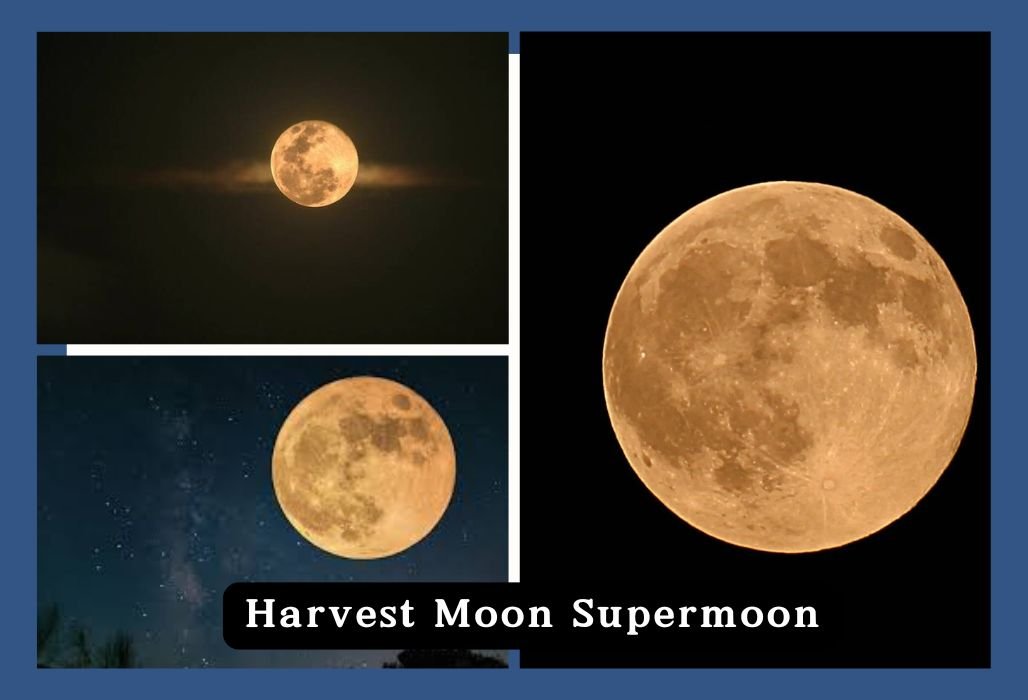
Harvest Moon Supermoon and Partial Lunar Eclipse: A Celestial Event You Won’t Want to Miss
On the evening of September 17, 2024, the night sky will treat us to a spectacular cosmic event—a rare Harvest Moon Supermoon combined with a partial lunar eclipse. This dual phenomenon promises to be a stunning sight as the moon appears slightly larger and brighter due to its proximity to Earth while Earth’s shadow partially obscures its surface.
A partial lunar eclipse occurs when Earth moves between the Sun and the Moon, causing part of the Moon to pass through Earth’s shadow. As a result, viewers will witness the Moon turn a murky reddish-brown color, with a “bite” taken out of it as Earth’s umbra (the darkest part of its shadow) covers about 3.5% of the Moon’s surface.
This event will be visible from several parts of the world, including North America, South America, Europe, and parts of Africa and Asia. Timing will vary depending on your location, so here’s everything you need to know to catch the show!
What is a Supermoon?
A supermoon occurs when the full moon coincides with the Moon’s closest point to Earth in its elliptical orbit, known as perigee. As a result, the Moon appears slightly larger and brighter than usual. While the visual difference may be subtle, it is a special occasion for skywatchers, especially when paired with a lunar eclipse.
The term “supermoon” refers to a full moon that is within 90% of its closest approach to Earth. This particular supermoon on September 17 is the second of four supermoons expected in 2024, with the others falling in August, October, and November.
What is a Partial Lunar Eclipse?
A partial lunar eclipse happens when only a portion of the Moon passes through Earth’s shadow. Unlike a total lunar eclipse, where the entire Moon is covered by Earth’s shadow, a partial eclipse gives the Moon a distinct appearance with a shadowed “bite.” The darkest phase of this eclipse, known as the umbra, will cover 3.5% of the Moon’s visible surface. The rest of the Moon will take on a slightly reddish-brown hue due to Earth’s lighter shadow, or penumbra.
This effect, often referred to as a “blood moon”, is caused by sunlight filtering through Earth’s atmosphere and scattering, casting a red tint on the Moon’s surface. It’s a more subtle version of the blood moon seen during a total eclipse but still offers a captivating view.
When and Where to Watch
The timing of this celestial event will vary based on your location. Here’s a breakdown of when and where the partial lunar eclipse will be visible:
- North America: The eclipse will peak at approximately 10:44 p.m. EDT on September 17.
- Europe and Africa: The eclipse will occur during the early hours of September 18, with the peak visible around 3:45 a.m. BST in London.
- South America: Viewers across the continent will enjoy a great view of the partial eclipse.
- Asia and Russia: The western parts of Asia and Russia will also catch a glimpse of this event.
For the most accurate timing based on your exact location, websites like Timeanddate.com provide detailed information about the eclipse’s visibility and peak times.
What Makes This Event Special?
The Harvest Moon Supermoon and partial lunar eclipse coming together on the same night makes this event particularly exciting. The Harvest Moon is the full moon closest to the autumnal equinox, traditionally used by farmers to harvest crops under its light. Pair that with a supermoon and the dramatic shadow of the lunar eclipse, and you have a rare astronomical combination that doesn’t happen every year.
The reddish-brown hue the Moon will take on, combined with its slightly larger-than-usual appearance, will make for a dramatic visual display, even if only part of the Moon is covered by Earth’s shadow.
Other Upcoming Celestial Events
If you’re a fan of skywatching, you won’t want to miss the next big event after the September 17 lunar eclipse. Approximately two weeks later, on October 2, 2024, Earth will witness an annular solar eclipse, often called the “ring of fire.” During this solar eclipse, the Moon covers the center of the Sun, leaving a bright ring of light visible from parts of the Pacific Ocean, southern Chile, and southern Argentina.
Conclusion: A Night to Remember
Whether you’re a seasoned astronomer or just enjoy gazing at the night sky, the Harvest Moon Supermoon combined with a partial lunar eclipse is an event you won’t want to miss. Make sure to mark your calendar for September 17, 2024, and check the exact timing based on your location. This rare celestial show promises to captivate viewers across the world with its mesmerizing play of light and shadow.
FAQs
1. What is the difference between a supermoon and a regular full moon?
A supermoon occurs when the Moon is at its closest point to Earth, making it appear slightly larger and brighter than a regular full moon, though the difference is subtle.
2. What is a partial lunar eclipse?
A partial lunar eclipse occurs when only part of the Moon passes through Earth’s shadow, causing a portion of the Moon to appear darkened.
3. When will the partial lunar eclipse be visible?
In the U.S. Eastern Time Zone, the eclipse will peak at 10:44 p.m. EDT on September 17, 2024. In London, the peak will be around 3:45 a.m. BST on September 18.
4. How much of the Moon will be covered during the partial lunar eclipse?
Approximately 3.5% of the Moon’s surface will be covered by Earth’s darkest shadow, or umbra, while the rest of the Moon will take on a reddish-brown hue.
5. What other celestial events are coming up?
Following the lunar eclipse, an annular solar eclipse will occur on October 2, 2024, visible from parts of the Pacific Ocean, southern Chile, and southern Argentina.